

Your posts get seen, your customers find you through the app, and building a website sounds like an expense with no obvious return. So if you’ve been asking “do I still need a website” when social media and AI assistants seem to have it covered, you deserve a proper answer rather than a sales pitch. Here’s the case on both sides, including the part most owners haven’t got to yet.
9 minute read · Published by Buzz Clique Team
Quick Answer
Yes, and the reason has got stronger rather than weaker. Your social presence is rented space where the rules can change without notice. Your website is the one part of your online presence you own outright. On top of that, the AI assistants people assume have replaced websites mostly build their answers by reading websites, so not having one won’t get you into the answer. It leaves you out of it.

Why “just use social” is a fair question
Worth starting by agreeing with the parts that are true, because there are several and pretending otherwise would be dishonest.
For a lot of businesses, social is where discovery actually happens. Somebody sees a post, shows a friend, and you’ve got a customer who was never searching for you in the first place. A website can’t do that. Social is also immediate, free to start, and needs no technical help. You can post from your phone between jobs.
It’s better at personality, too. A short clip of you doing the work says more than three paragraphs of copy about your commitment to quality. The feedback is instant as well, which makes it far easier to keep going than a website nobody appears to be visiting.
So social is clearly worth doing. The real question is whether it can carry the whole job on its own, and that’s where it hits limits that have nothing to do with how well you use it.
The part that gets skipped: you are renting
Everything you’ve built on a social platform sits on land you don’t own.
The platform decides who sees your posts, and it can change that whenever it likes. It decides which formats get attention this year. It can suspend an account over an automated misunderstanding, and the appeal process is usually a form rather than a person. None of that takes bad intent from anyone. It’s just what renting means, and at your size the terms aren’t up for negotiation.
The consequence that matters is that you can’t take the audience with you. Followers aren’t a list you own, so if access disappears, the connection goes with it. Owners who’ve been through it tend to describe it the same way: the business didn’t fail, it just went invisible overnight while they waited on a reply.
A website is the opposite arrangement. Your domain is registered to you, the content is yours, and nobody can switch off access over a policy change. Unglamorous, and pretty much the whole argument.
What a website does that a profile structurally cannot
Part of this is about ownership. The rest is what each format was built to do.
- Be found for what people search. Someone typing a specific question into a search engine wants an answer page, and a social post rarely turns up for it. Search brings you people who are already trying to solve the problem you solve.
- Explain properly. Feeds are built for short, fast attention. A website can walk someone through what you do, what it costs, how it works, and what happens next, in the order they need it.
- Be there at the deciding moment. Your post was seen on Tuesday. The decision gets made three weeks later, when that person is ready. The feed has long since moved on. The page hasn’t moved at all.
- Stay put. Good posts slide downward and disappear. A good page keeps answering the same question for years, so the effort compounds instead of evaporating.
Owners who tell us they get everything from Instagram are usually right about where people first hear of them, and wrong about what happens next. Discovery and decision are two different moments, and they hardly ever happen in the same place.
Buzz Clique · Web Design
Wondering whether your site is pulling its weight?
A free review tells you what your website is doing for you today, and whether it is worth building on or starting over.
The AI twist most owners have not made yet
This is the argument that’s changed most in the last couple of years, and it points the opposite way to how it first looks.
When someone asks an assistant for a recommendation and gets back a short answer naming two or three businesses, it looks like websites just got cut out of the process. Underneath, the reverse is happening. Those systems assemble answers largely by reading pages on the open web and cross-checking what they find against other sources. Websites are the raw material.
So a business with no site of its own gives those systems very little to read. You might still show up through a directory listing or a profile, described however somebody else chose to describe you, with no detail you control. A business with a clear site that plainly states what it does, where, and for whom has handed them something to work with.
One caveat, because it matters: having a website won’t guarantee you get named in anyone’s AI answer, and nobody can promise it will. What it does is make you possible to name. The mechanics are covered properly in how to get found on Google and AI search.
What a stranger concludes when there is no site
There’s a quieter cost here, and it never shows up in any report.
Someone hears about you, likes what they hear, and goes looking. A profile with recent posts is reassuring as far as it goes. If that’s all there is, a certain kind of customer hesitates, particularly when the job is expensive, involves access to their home, or has to be right first time.
Nobody thinks a website proves you’re good. What it signals is a business that expects to be checked and is comfortable being checked. On larger jobs, and with business customers, its absence is often what quietly moves you off the shortlist. You never find out it happened.
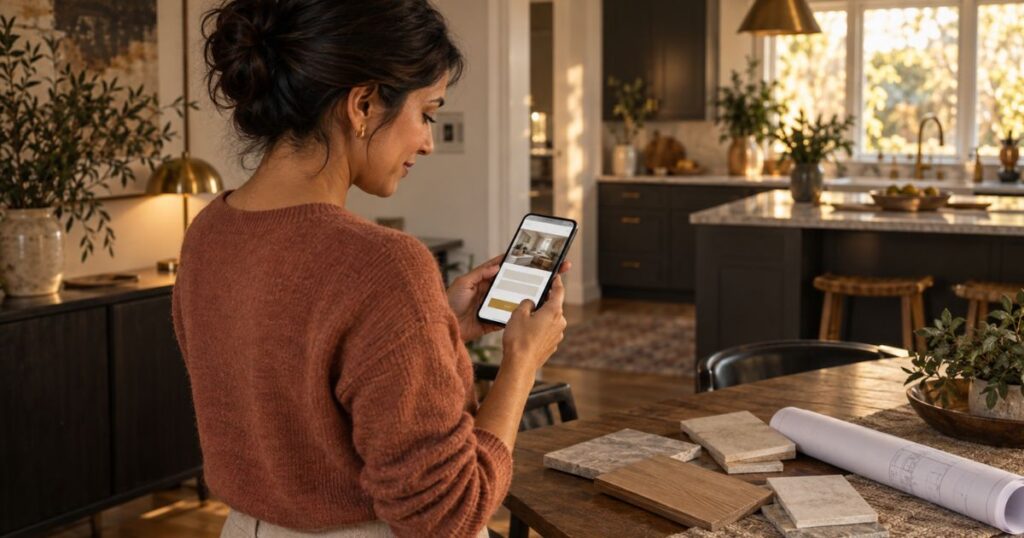
How small a website can actually be
Most of the resistance here isn’t really about whether a site is useful. It’s a mental picture of a big, expensive project with months of decisions attached.
It doesn’t have to be that. A site that clearly says what you do, who you do it for, where you work, roughly what it involves and how to reach you is doing most of the job. Add one page answering the question customers ask most and you’re ahead of a great many businesses in your category.
A tidy handful of pages that are accurate today beats twenty pages describing services you stopped offering two years ago. Current and honest wins over large and impressive. If you want the fuller version of what makes one work once it’s up, that’s covered in what makes a good small business website.
If time and money are tight, build the small honest version now. A site you actually finish beats the ambitious one you never start.
Social to be seen, site to be chosen
Website versus social was always a slightly wrong framing. They aren’t competitors, and the businesses doing best with both treat them as different stages of the same path.
Social is reach and personality. It’s where people meet you, see the work, and form an impression. Your site is where they go when that impression turns into a decision, and where search and AI systems go to find out who you actually are. Each one does what the other can’t.
In practice, that means keep posting, and make sure it all points somewhere you own. The feed brings people in. The site closes the gap.
Frequently Asked Questions
It’s better than nothing and useful as a hub, but it’s still rented space on someone else’s service, and it holds too little for a search engine or an AI assistant to work out what your business actually does. Think of it as a signpost rather than a destination. It works best pointing at a site you own.
Then Instagram is working, so keep going. What’s worth checking is what those customers do between seeing a post and getting in touch, and how many went looking for more and found nothing. You only ever see the people who arrived, never the ones who quietly moved on.
Simpler than most people expect. A handful of pages covering what you do, who for, where, roughly how it works and how to get hold of you will serve most small businesses well. Being accurate and clear counts for far more than size or visual ambition.
No, and it isn’t meant to. They do different jobs. Social gets you seen by people who weren’t looking for you; your site gets you chosen by people who are deciding. Drop either one and you leave a gap the other can’t cover.
Own the part that has to last
None of this is an argument from tradition. It’s that one piece of your presence should belong to you, be there when someone is deciding, and be readable by the systems that increasingly answer on your behalf. Buzz Clique is a US-based, full-service team that helps small businesses get web, search, ads, content and ongoing care working together, which usually starts with checking that the piece you own is actually doing its job. If you’re not sure yours is, a free review will tell you.
Buzz Clique · Web Design
Build the part you actually own
Whether you need a small honest site or a rebuild of one that has drifted out of date, we can tell you what it would take.
Found this useful? Pass it on.