

Google Ads vs Facebook Ads is one of the first questions small business owners ask when they are ready to spend money on paid advertising. If the budget is limited, the decision matters. Choosing the wrong platform can lead to wasted clicks, weak leads, and the feeling that “ads just do not work.”
The honest answer is not that one platform is always better. Google Ads and Facebook Ads do different jobs. Google usually works best when people are already searching for what you sell. Facebook, Instagram, and other Meta placements usually work best when people need to discover your offer before they search for it.
6 minute read · Published by Buzz Clique Team
Google Ads vs Facebook Ads: Quick Answer
Google Ads is usually the better starting point when your customers already search for your service, product, or local business need. Facebook Ads are usually better when your offer is visual, lifestyle-based, discovery-driven, or needs storytelling before someone is ready to buy.
If people are actively Googling what you offer, start with Google Ads. If people need to see the product, understand the story, or be reminded over time, Facebook Ads may be the better first move. For many businesses, the best long-term setup is using Google to capture demand and Facebook to create awareness, retarget visitors, and stay visible.
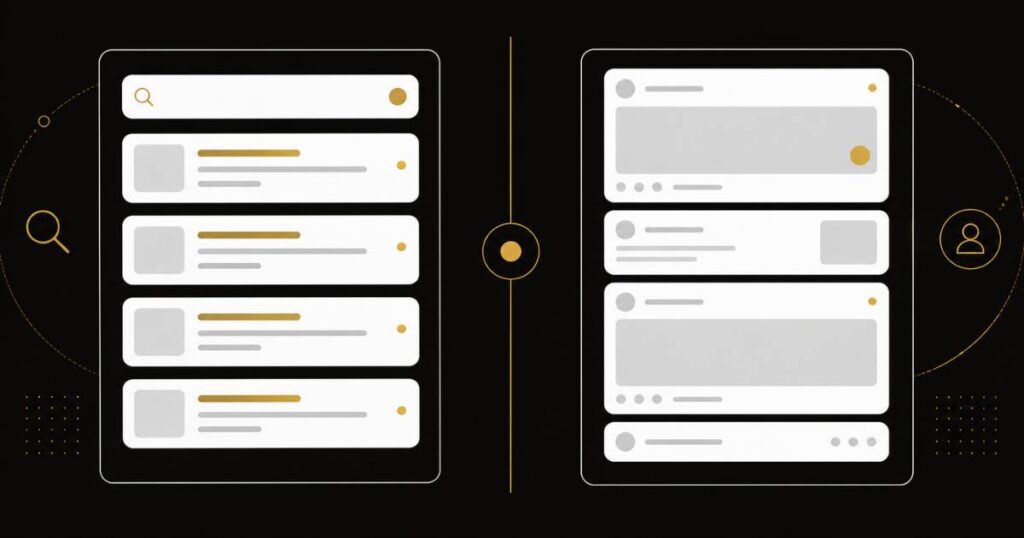
Demand Capture vs Demand Creation
The easiest way to compare Google Ads vs Facebook Ads is to think about demand capture and demand creation.
Google Ads is demand capture. Someone types a search like “emergency plumber near me,” “family lawyer in Lexington,” or “best CRM for contractors.” They already know they need something. Your ad appears at the moment they are looking for a solution.
Google’s own guidance says Search campaigns let you reach people while they are searching for products and services you offer. That is why Google Ads often works well for urgent services, local needs, and high-intent searches.
Google Ads Search campaign guidance is a useful reference if you want to understand why search intent matters so much in paid search.
Facebook Ads is demand creation. People are usually not searching when they see your ad. They are scrolling through Facebook, Instagram, Stories, Reels, or other Meta placements. Your ad has to interrupt in a useful way, earn attention, and make someone curious enough to learn more.
Meta’s ad targeting tools are built around reaching people by audience signals, interests, behaviors, and placements. That can be powerful, but it means the creative, offer, and landing page have to do more work because the person may not have been actively looking for you.
Meta’s ad targeting overview gives a helpful look at how audience targeting works across Meta advertising.
When Google Ads Usually Wins
Google Ads usually fits best when your business solves a problem people already know they have. The search itself shows intent. Someone looking for a roofer, dentist, accountant, attorney, locksmith, HVAC repair, or website maintenance company is already much closer to taking action.
Google Ads tends to work well when:
- You sell a service people search for by name
- Your customers have an urgent or specific need
- Your business is local and people search with “near me” or city terms
- Your offer is high-consideration and buyers compare options
- You have a landing page that matches the exact search intent
- You can afford competitive clicks in your market
The advantage is intent. People clicking from Google are often already partway through the buying decision. The challenge is competition. Every business in your category may be bidding for the same click, so the campaign needs strong keyword targeting, clear ad copy, and a landing page that can convert.
When Facebook Ads Usually Wins
Facebook Ads and Instagram Ads usually fit best when your offer benefits from visuals, emotion, lifestyle context, or repeated exposure. The person may not be searching for the product yet, but the right image, video, story, or offer can create interest.
Facebook Ads tend to work well when:
- You sell a visual product or service
- Your offer is something people want after seeing it
- You need to build awareness before someone is ready to buy
- You have strong photos, videos, testimonials, or before-and-after examples
- You want to retarget people who already visited your website
- Your business benefits from brand personality, storytelling, or community
The advantage is attention and reach. You can show people who you are, what makes the offer different, and why they should care. The challenge is that the user did not ask for your ad. The creative has to earn the click, and the offer has to be clear enough to move someone from casual interest to action.
7 Smart Ways to Choose Between Google Ads and Facebook Ads
If you are deciding between Facebook ads vs Google ads small business campaigns, use these seven questions before spending money.
1. Are people already searching for what you sell? If yes, Google Ads is usually the stronger first test. If no, Facebook Ads may be better for building awareness.
2. Is the need urgent? Urgent needs often perform better on Google because people search when they need help now.
3. Is the offer visual? Products, experiences, design work, food, events, apparel, and lifestyle services often benefit from Facebook and Instagram creative.
4. Is the buying decision simple or complex? Simple urgent decisions may work well on Google. More emotional, visual, or educational offers may need social discovery first.
5. Do you have strong creative? Facebook Ads usually need good images, videos, hooks, and offers. Weak creative can make the platform look worse than it is.
6. Is your landing page ready? Both platforms need a page that matches the ad. If the page is slow, vague, or confusing, neither platform will save the campaign.
7. Do you have enough budget for a fair test? A small budget spread across two platforms often creates weak data. One focused campaign usually teaches you more than two underfunded campaigns.
Google Ads or Social Media Ads for Small Business?
If you are asking whether to choose Google Ads or social media ads for small business, start with the customer’s mindset.
- Choose Google Ads first when people are actively searching for your solution.
- Choose Facebook Ads first when people need to see, feel, or discover the offer before they search.
- Use both when you have enough budget, a strong website, and a clear reason for each platform.
For many service-based local businesses, Google Ads is the cleaner starting point because the search intent is already there. For many product, lifestyle, event, or brand-driven businesses, Facebook Ads can be the better way to create attention and demand.
The key is not choosing the platform you personally like best. It is choosing the platform that matches how your customers actually make decisions.
If you are not sure which side you fall on, a quick outside read is usually faster than guessing.
When Running Both Actually Makes Sense
Running both platforms can work very well when each platform has a clear job. Google can capture high-intent searches. Facebook and Instagram can build awareness, retarget visitors, promote offers, and keep your brand visible to people who are not ready yet.
For example, a home service company might use Google Ads for “emergency repair” searches and Facebook Ads for seasonal offers, customer education, and retargeting people who visited the website but did not request a quote. An e-commerce brand might use Facebook Ads to introduce products and Google Ads to catch people searching for those products later.
The warning is budget. Running both only makes sense when each platform has enough money, creative, and tracking to get a fair test. Splitting a very small budget too thin can make both campaigns look like they are failing.
The Landing Page Matters More Than the Platform
The platform matters, but the page after the click matters just as much. Many businesses say, “We tried Google Ads and it did not work,” or “Facebook Ads did not work for us.” Sometimes that is true. But often the ads were sending people to a page that was not ready to convert.
Before blaming the platform, check the experience after the click:
- Does the page match the ad and the search or audience intent?
- Is the main offer clear within a few seconds?
- Is there one obvious next step?
- Does the page load quickly on mobile?
- Does it include trust signals like reviews, proof, examples, or guarantees?
- Is the form or contact process simple?
Fixing the landing page can sometimes improve results faster than changing the platform. Paid advertising for small business works best when the ad and the page feel like one connected path.
Which Ads Platform for Small Business Is Best?
The best answer depends on what you sell and how people buy it. Google Ads usually wins when people already have intent. Facebook Ads usually wins when the offer needs attention, visuals, or education before someone is ready.
A simple rule works well:
- If people search for it, test Google Ads first.
- If people need to discover it, test Facebook Ads first.
- If you have the budget and strategy, use both for different jobs.
Choosing the right ads platform for small business is not about guessing which platform is popular. It is about matching the platform to the buyer’s mindset, your offer, your creative, and the page you send people to.
Google Ads is usually better when people are already searching for your product or service. Facebook Ads are often better when your offer needs visuals, storytelling, awareness, or discovery before someone is ready to buy.
Pick one platform and run it well. A small budget on Google Ads can still work if it is tightly focused on specific searches. A small Facebook Ads budget can work when the creative and offer are strong. Splitting a small budget across both platforms often creates weak data.
Yes, but each platform needs a clear job and enough budget for a fair test. Google can capture active demand, while Facebook and Instagram can build awareness, retarget visitors, and support offers over time.
Google Ads often converts at a higher rate because users are actively searching. Facebook Ads can produce cheaper attention and strong awareness, but usually need better creative, stronger follow-up, and a clearer path to conversion.
Plan on at least 30 to 60 days with a consistent budget, clear tracking, and enough traffic to learn from. If a platform is not working after a fair test, review the offer, targeting, creative, and landing page before abandoning it.
Make a Confident Choice and Move On
The best ad platform is the one that fits the way your customers actually decide to buy. Google Ads vs Facebook Ads is not about which company is better. It is about whether you need to capture existing demand or create interest first.
Our Google Ads management work focuses on getting paid search to actually pay back — the right keywords, the right offer, the right page after the click, and clear reporting that helps guide the next move.
If you are trying to decide where your ad budget should go, we can take a look at your business, offer, website, and goals before you spend money in the wrong place.
Found this useful? Pass it on.